Bookmaking companies have experienced an unprecedented surge in recent years, with profits continuing to grow annually. This is driven by several factors, from the increasing popularity of sports to the simplification of the betting process itself. Naturally, bookmakers earned much less when users had to go to the nearest betting shop to place a wager on their favorite team. In some cities, people had to cover enormous distances. Now, it’s as simple as completing a few registration steps, verifying your account, depositing funds using any available method, and then betting, betting, and betting some more.
As betting popularity has grown, bookmaking companies have started devising various business strategies to ensure they always come out ahead. The companies themselves don’t widely disclose how much they win on specific championships, but one legal bookmaker reported that during the 2020/2021 RPL season, they only lost money in the 8th round. All other rounds were profitable. As the headline indicates, legal bookmakers earned nearly 30 billion rubles in net profit in 2021. We’ll return to the numbers later, but for now, let’s cover some theoretical aspects.
How Bookmaker Operations Work
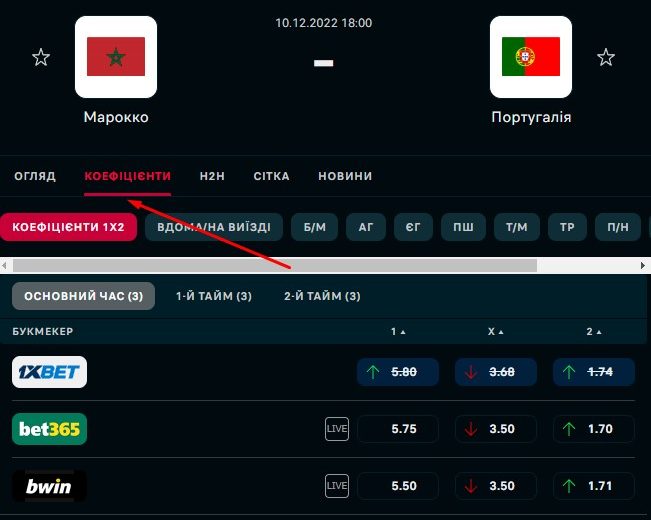
A bookmaker offers a vast selection of matches with odds for each. Odds are the multiplier used to calculate potential winnings from your stake. For example, odds of 2.00 mean that a 100-ruble bet would return 200 rubles (100 x 2.00 = 200).
Odds vary for different events and can even differ for the same match across various bookmakers. Within a single match, odds can change significantly as the event approaches.
How Odds Are Formed
Odds represent the numerical expression of the probability of a specific athlete or team winning. To fully answer this, we first need to understand how that probability is determined.
The probability of a win is influenced by numerous factors. In soccer, these include:
- Current team form.
- Whether it’s a home or away game.
- Tournament standing (including motivation levels).
- Injuries.
- A tough opponent.
- History of head-to-head matches.
- Injuries and suspensions.
- A challenging referee (for example, teams with an aggressive style might struggle with a referee who hands out cards frequently).
This is just a short list of what might be used to calculate probability. Accordingly, the bookmaker analyzes these factors and determines that the hosts have a 20% chance of winning, a draw has 30%, and the visitors have 50%. This probability is then converted into odds through simple math: divide 100 by the probability percentage. For our example:
100/20 = odds of 5.00 for the hosts’ win; 100/30 = odds of 3.33 for a draw; 100/50 = odds of 2.00 for the visitors’ win.
These odds will still be adjusted, but we’ll discuss that later. For now, let’s talk about who calculates this probability and how.
Calculating Probability
There are three ways to obtain probabilities and odds:
- An in-house team of analysts.
- Purchasing ready-made odds from a provider.
- Using advanced software to determine win probabilities (either purchased or developed in-house).
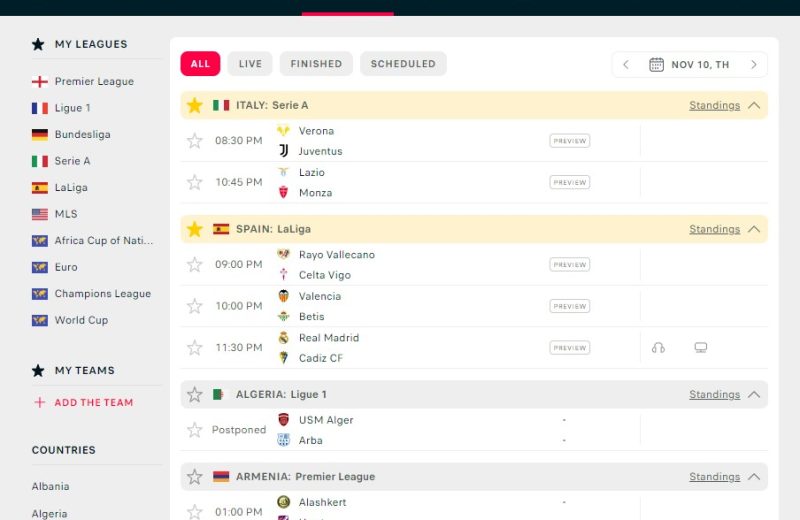
You’ve seen how many matches each bookmaker offers daily? The list far exceeds a thousand, so no bookmaker can rely solely on an analyst team—they use either purchased odds or those calculated by software. But analysts do exist, and every company has them. They independently calculate odds for high-stakes matches where big money is expected (like Champions League playoffs or the World Cup). Otherwise, their role is to verify what the software or providers suggest and make adjustments if their expert opinion differs.
How Bookmakers Make Money
There are several key points:
- Margin
- New players
- Accumulators and other multi-bets.
- Enticements with bonuses and promotions.
- Top-tier events.
Margin
The primary way bookmakers earn is through the margin. Simply put, they intentionally lower the odds for each outcome to ensure a profit. Remember, in our example, the odds were 5.00, 3.33, and 2.00. For the bookmaker, they might look like this:
4.80 x 3.21 x 1.92
So, if bets are placed proportionally to the win probabilities, the bookmaker is guaranteed a solid profit. Another way to view it: bookmakers build a margin of around 2 to 5-6 percent into top events. This is the amount players miss out on with every win. Without the margin, they’d get a few percent more per bet.
Each bookmaker has its own policy, with margins varying based on the match’s importance, tournament, sport type, bet type (pre-match or live), and more. Margins typically start at 2%, but for some unpopular tournaments, they can reach 11-12% at certain bookmakers (like women’s volleyball championships in Belarus).
We mentioned that the margin is the percentage players lose on each win. So, it’s crucial to find a bookmaker with the lowest margin. That way, we lose less, which is what we want. But how? It’s just a few simple calculations. For example, if tennis odds are 1.85 and 1.85, what do we do?
(1 / first odds + 1 / second odds — 1) * 100%.
In this case:
(1 / 1.85 + 1 / 1.85 — 1) * 100 = 8.2%
We’ve calculated that the margin here is 8.2%. If this is a top tennis match, that’s a massive margin. It’s best to skip this bookmaker. As you can see, you’re giving up 8.2% on wins, which is too much. Roughly speaking, every 12th winning bet yields no profit. Better to look for a bookmaker with a lower margin. Meanwhile, this one profits handsomely.
By the way, margins are calculated the same way for bets with three outcomes, like 1X2 in soccer. Just add the third odds.
(1 / first odds + 1 / second odds + 1 / third odds — 1) * 100%.
We recommend focusing on major bookmakers. Of course, not all big companies are the same. For instance, at 1xStavka or Marathon, you can find matches with margins as low as 1-2%. But others, like Liga Stavok, Winline, or Fonbet, rarely go below 5%.
Among legal bookmakers, two companies now offer a daily ‘0% margin’ promotion: Marathon and Leon. They select the most exciting matches of the day and provide margins from 0.2% to 0.8%. However, Marathon limits this to bets like 1X2, main handicaps, and main totals, while Leon restricts it to just 1X2. Something similar called ‘Enhanced Odds’ exists at Zenit, but their margins still reach 1-2%.
Margins also differ between live and pre-match betting. For pre-match, there’s plenty of time to calculate probabilities accurately, minimizing errors, so they can offer lower margins. In live betting, odds change rapidly, increasing the chance of mistakes. Plus, there’s less time to react to injuries or substitutions. Since errors are more likely, margins are higher.
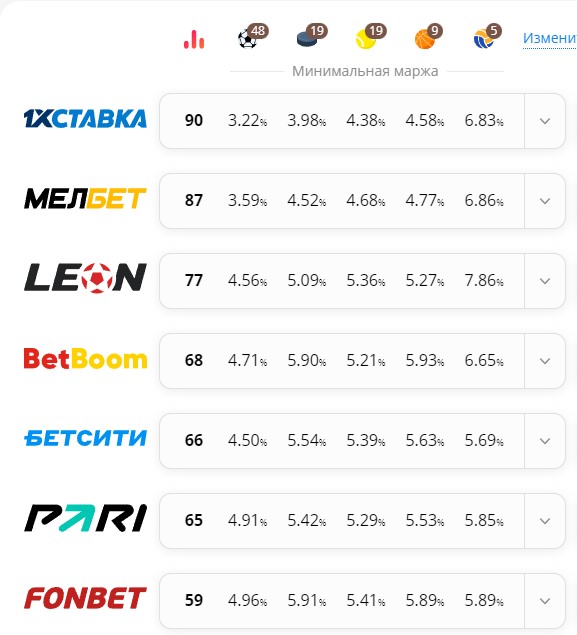
Let’s look at a ranking of bookmakers based solely on odds (margins).
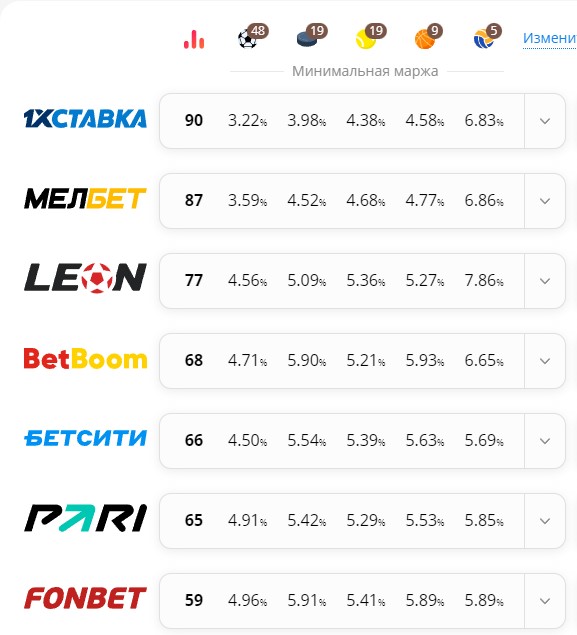
The bold number on the left is the bookmaker’s rating, calculated using specific formulas. The next five percentage figures are the margins for soccer, hockey, tennis, basketball, and volleyball. This ranking comes from the Overbetting website, and I encourage you to trust it. I was personally part of the team that developed this ranking. It’s based on margin calculations from thousands of matches of various sizes. In the settings, you can select specific sports or even championships to see which bookmakers offer the best odds for the ones you bet on most. It’s incredibly useful.
New Players
Every newcomer is a goldmine for bookmakers. They make a range of mistakes due to inexperience or lack of knowledge. These include:
- Emotional errors.
- Bets on unfamiliar markets.
- Lack of bankroll management.
- All-in bets on low odds.
Emotional errors occur when an inexperienced person can’t handle losing. It’s a common trait. Remember the saying:
A father didn’t beat his son for gambling, but for trying to win it back.
This old wisdom applies to betting too. Unfortunately, newcomers often can’t control their emotions and fall into this trap. It’s understandable—it’s a new world full of excitement and thrill—but more experienced players toughen up and realize that not every day can be a winner, and a losing day can be set aside. In modern terms, there’s ’tilt’—a state where someone loses their head and makes rash decisions, leading to bigger problems. Newcomers are the least tilt-resistant players.
As for bets on unfamiliar markets, this is another pitfall for beginners and a frustration for customer support specialists who have to deal with angry users explaining basics. Issues can arise with whole-number handicaps, totals, or Asian lines. Newbies often don’t understand if totals include overtime or not, and so on. There are two solutions: the player must study the rules in detail or learn from mistakes. No one wants to read through hundreds of pages of rules, and learning from errors just builds the bookmaker’s profits. That’s the point! 🙂
Lack of bankroll management is disastrous in all forms of gambling: betting, casinos, blackjack, poker, and more. It’s another rookie mistake that veterans avoid. What is bankroll management? Bankroll is your total funds. Management means handling it wisely. Any pro bettor will tell you to wager no more than 10% of your bankroll at most, and ideally 2-5%. Why? Even pros face losing streaks of 4-5 bets. Betting half your bankroll means two losses empty your account, forcing a new deposit. But newcomers don’t know this and bet half or go all-in. A couple of losses later, their account is wiped, and bookmakers celebrate, waiting for another deposit.
All-in on low odds is one of the biggest issues for beginners. Rarely does someone new to betting realize that odds of 1.1, or even 1.01, aren’t a sure win. It’s sports—upsets happen and will keep happening. If they didn’t, bookmakers would be out of business. Yes, the odds are low, and the win probability is high, but remember, probability matches the odds, as we discussed earlier. Treating all-in bets on low odds as a way to steadily profit leads straight to an empty account. You might win 5 or even 10 such bets, but one loss wipes it out, and you’re depositing again. Bookmakers celebrate once more.
We haven’t even touched on how newcomers dive into accumulators and systems, lured by high odds and the chance to win big fast. We’ll cover that in a separate section, as it’s not just beginners who make this mistake.
Accumulators and Systems
If you’re unfamiliar, an accumulator is a bet where odds are multiplied, and all selected outcomes must win. For example, take Premier League wins for Manchester City, Liverpool, and Arsenal, each at 2.00 odds. That gives 2.00 x 2.00 x 2.00 = 8.00. Bet 100 rubles, win 800. This can blindside players, leading them to pour money into accumulators. But remember, each match has a built-in margin, and combining several multiplies it—turning a 3-4% margin into 10-15% or more. Bookmakers love it.
Bookmakers heavily promote accumulators and offer special promotions for them. Naturally, each additional outcome lowers your win chances while the margin adds up. Four matches at 5% margin each? That’s a 20% margin. Exactly what bookmakers want.
Enticements with Bonuses and Promotions
It’s similar to accumulators. Bookmakers lure customers, but not always with fair terms. For instance, Liga Stavok, Betcity, and Winline give welcome bonuses without a deposit—just for signing up. Sounds great: take free money, bet it, and to withdraw, make a minimum 100-ruble deposit, which isn’t a big deal. It’s a good option, but bookmakers use it to attract newcomers who lose due to the mistakes we mentioned.
Then there are ridiculous bonuses. Take the now-defunct Astrabet, which offered a first-deposit bonus. To convert it to real rubles, you had to win 10 accumulators with odds of 5… 10 in a row… That’s impossible, especially for 10,000 rubles. If you did it with real money, you’d have so much that your balance field couldn’t hold all the digits.
Another awful promotion is ‘Play for 50 Million from Winline.’ It’s a pseudo-pool with 13 matches where you pick the winner of each, bet 12 rubles, and if you get it right, win 50 million. In 210 draws, there was only one winner, in the third round when there were just 11 matches, not 13. Since switching to 13 matches, no one’s won. Plus, the math: for 50 million on a 200-ruble bet, that’s odds of 250,000. Even with the lowest possible odds, it’s like betting 200 rubles on 900,000 odds. You’re better off making your own accumulator than joining this.
There are plenty more examples. So, study promotions before jumping in. A great resource that sums them up concisely is BonusPromus. They cut through the bookmaker’s fine print, pull out the key info, and present it neatly. If a promotion is terrible, they’ll say so.
Top-Tier Events
Take third-tier volleyball with a 10% margin versus top soccer with 2%. Where’s the bigger profit? Soccer. Why? Because 50 people might bet on volleyball, but nearly the whole country bets on a Champions League final. That’s why major events, especially in soccer, are a bookmaker’s goldmine. It’s hard to imagine similar volumes in other sports, except maybe an Olympic hockey final between Russia and the USA, but even that’s unlikely.
Bookmakers keep analyst teams mainly to accurately calculate probabilities for these big events. It’s their main revenue source and demands the most attention.
How Much Do Bookmakers Earn
2022 isn’t over yet, and earnings reports for bookmakers aren’t ready. But we have figures for 2021 and 2020. Let’s review them.
Total revenue for all legal bookmakers in 2021 was 387 billion rubles.
For net profit, Fonbet holds about 30 billion, Winline nearly 10 billion, and 1xStavka almost 8 billion. The top three together have just over 45 billion rubles. Overall, the net profit for all legal bookmakers was 54.7 billion rubles, meaning Fonbet takes more than half of the industry’s net profit. The rest outside the top three show modest figures. Is 1 billion in net profit modest? Probably not.
Are all bookmakers profitable? It might seem complex, but it’s straightforward. In recent years, many companies—some globally known—have left the Russian market, including less famous ones like BWIN, Pin Up, VulcanBet, Astrabet, Bettery, and others. As you see, surviving in the domestic betting market is tough, and entry is expensive: you need 100 million rubles in statutory capital and another 500 million in bank guarantees.
After several global bookmakers failed here, no one’s rushing in. We haven’t seen ‘fresh meat’ in a while.
Conclusions
We’ve talked a lot about bookmaker profits, and yes, they do stay in the black. But that doesn’t mean beating them is impossible. You probably won’t bankrupt a bookmaker, but playing profitably, even consistently, is achievable.
Bookmakers have analysts, software, and bought odds. You have your brain to counter them and can use extra stats and analytical resources. If a bookmaker sets a 3% margin on soccer, your goal is to outperform their analysts by more than 3%. Hit that, and you’re in profit.
Remember, treating betting as a steady income source for your family is risky. We suggest seeing it as entertainment and sticking to a predefined budget.