According to Newzoo, in 2021, the esports economy hit $1.084 billion, and the total audience surpassed 728 million people. These figures keep rising every year. However, the industry’s rapid growth has drawn in not just new players, fans, and sponsors, but also criminals and low-level players looking to sway match outcomes for profit.
Arrest of a Player and Fine
As the industry grew, so did the scandals involving well-known players and tournament organizers. Popular games like CS:GO, Dota 2, League of Legends, and StarCraft faced major controversies. One of the loudest incidents happened in South Korea in 2016, when a StarCraft II player known as «Life» (real name Lee Seong-hyun) – a young and highly regarded figure – was charged and fined for match-fixing. He received an 18-month prison sentence and a fine of 70 million won (about $58,000). ESPN called this event the biggest disappointment of the year in esports.

Lee Seong-hyun
In 2016, the estimated revenue from betting on fixed matches was around $2 billion.
«Betting fraud is the biggest threat to esports. It happens much like in other sports. It’s incredibly widespread. The epicenter of esports is in Southeast Asia, so Korea and China are two of the largest illegal markets. I receive a huge amount of evidence that match-fixing is rampant in China,» said ESIC lawyer Ian Smith.
Fraudulent Schemes
According to Smith, there are two main fraudulent schemes. The first, at a lower level, involves a team or player trying to influence the match outcome on their own. The second, at a higher level, includes tournament organizers or bookmakers. Either way, the scheme doesn’t stay hidden. As in other sports, if there’s a surge in betting activity or a massive bet on a specific event, ESIC gets alerted. The organization conducts a thorough investigation and often involves law enforcement.
For example, in 2020, ESIC banned 35 CS:GO players for periods ranging from one to five years for betting on their own team’s wins or losses in certain tournaments.
«Like in many traditional sports, the prevalence of match-fixing depends on the competition level. The further you get from top-tier events, the more vulnerable any game is to fixing,» said Pinnacle representative Sam Gomersall.
And it’s true – if a tournament gets little coverage and only about 100 people watch a game on average, most of the community won’t hear about any foul play.
The Skins Scandal
What sets esports apart from traditional sports is the existence of «skins» – virtual items that don’t affect gameplay mechanics, like boosting strength or accuracy; they just change the appearance of weapons or characters. The rise of skins has impacted the gambling economy. Some skins or stickers can be worth hundreds of thousands of dollars. For instance, analyst ohnePixel showcased one of the rarest CS:GO skins: the «Karambit | Blue Gem» knife, valued at $800,000.
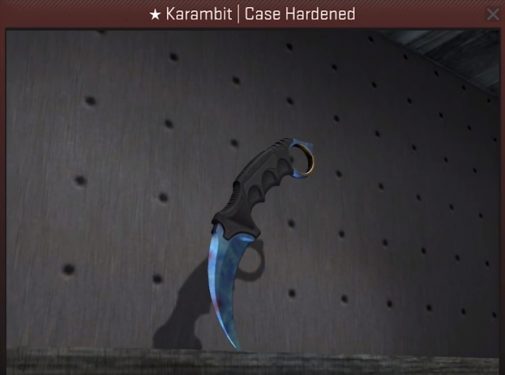
«Karambit | Blue Gem»
The biggest skins scandal occurred in 2014 in the US during a CS:GO tournament. There, the favorite team iBUYPOWER lost to underdog NetcodeGuides.com with a score of 4-16, making some questionable plays along the way. Later, journalist Richard Lewis proved that iBUYPOWER players intentionally threw the game and received skins worth around $10,000. Almost all the players got long-term bans. Only Skadoodle escaped unscathed by refusing to accept the rewards into his inventory.
«The Temptation is Strong»
Another issue in the industry is that esports athletes spend more time online than traditional athletes, interact more with their audience, and are closer to everyday players, increasing the risk of collusion. Former Natus Vincere captain Daniil «Zeus» Teslenko mentioned in a Cybersport interview that he was approached multiple times to throw matches for hundreds of thousands of dollars. He also noted that some pro teams have agreed to it.
«The temptation is huge – you play so many matches every week that it’s easy to think one odd loss will get lost in the mix. But I know in my head how much time and effort I’ve put into Counter-Strike,» said Zeus.
There are many honest players like Zeus, but there are also those who choose to profit from cheating. Fortunately, ESIC investigates a large number of fixed matches and penalizes offenders, often involving law enforcement.