Sports betting is an environment that’s not easy for a beginner to dive into. There are several reasons for this. One of them is the challenge in understanding what’s written in educational articles and what friends say when discussing the topic. On the other hand, knowing key terms can help in asking the right questions and forming effective search queries.
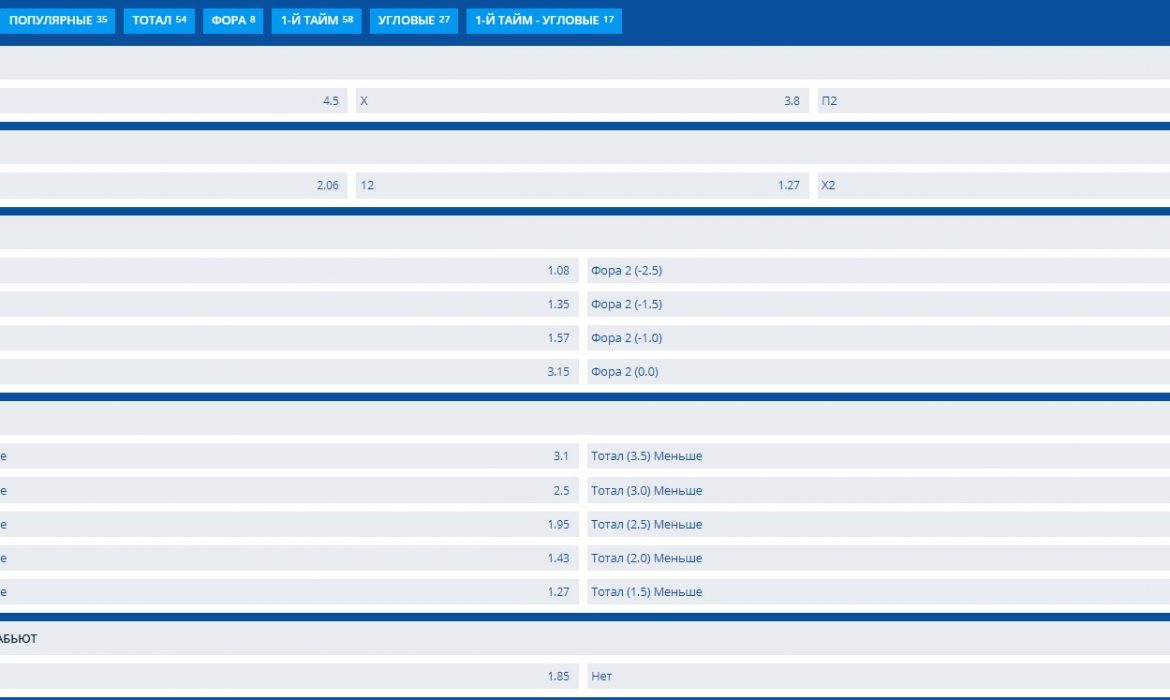
It’s essential to know the terminology. So, we’re offering you a brief dictionary of official and slang terms with their descriptions. To make it clear, we’ll use screenshots from the Mostbet betting site.
Fundamentals of Terminology
Line — All sports, tournaments, and matches available for betting.
Live — Bets placed during an ongoing match.
Example of usage. I placed a live bet on Lokomotiv’s win. This means the bet was made at any point after the starting whistle.
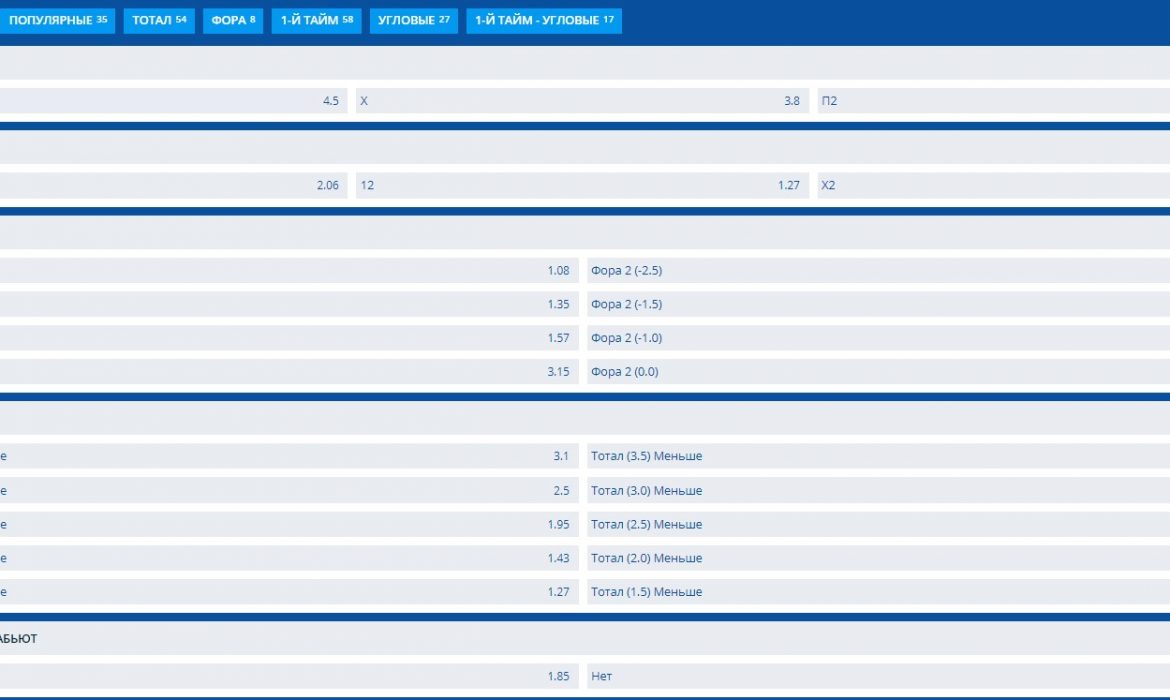
Bet Slip — All possible outcomes you can bet on. In the screenshot below, this is the entire bet slip.
Pre-match Bet — A bet placed before the match starts.
Odds — The number displayed next to an outcome. For example, odds for Lokomotiv’s win are 1.10. The winnings will be the stake amount multiplied by the odds.
Example of usage — Betting 1000 rubles on Lokomotiv’s win at odds of 1.1. If the bet wins, you’ll get 1000 x 1.1 = 1100 rubles. The screenshot shows the odds.
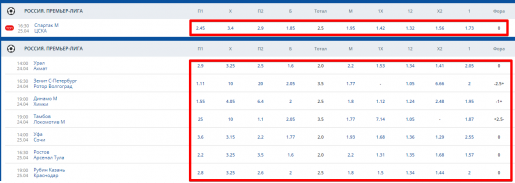
Single Bet (Straight Bet) — A bet on a single outcome, regardless of what it is — a team’s win, total goals, or if a player scores, and so on.
Accumulator — A bet combining multiple outcomes where the odds are multiplied. For the bet to win, all outcomes must succeed. You can include from 2 matches or more. Each bookmaker sets its own limit for the number of matches in an accumulator. Most allow up to 10, while some go up to 20 or 30.
System Bet. This type is more complex. You select from 3 matches or more. Unlike an accumulator, you specify how many outcomes must succeed at minimum.
Example of usage. Say you choose a 2 out of 3 system. This means you’ve picked 3 matches, which are then broken into accumulators of 2 games each (first and second match, first and third, second and third). The stake is divided equally among the resulting accumulators. If all 3 matches win, you’ll get payouts for all 3 accumulators. If one loses, you’ll still have one winning accumulator.
Free Bet — A complimentary bet offered by a bookmaker to its clients, usually for specific actions like participating in promotions or depositing funds.
Key Terms
Betting — Derived from the English word ‘bet,’ meaning a wager. It refers to the activity of placing bets.
Example. Two equivalent phrases: ‘I’m into sports betting’ and ‘I’m into betting.’
Bettor — A person who places bets. It’s not an insult.
Bookie (BK, bookmaker, betting site). These terms refer to betting companies.
Betting Shop (retail outlet, betting point) — A physical location where you can place bets with a cashier.
Tipster — Someone who provides professional analysis and sells predictions on match outcomes.
Sure Bet (lock, solid play, nailed on). These terms describe bets that seem certain to win.
Match-fixer — A person who sells or freely shares information about fixed matches.
Insider — Someone who provides exclusive information about teams or players not available in the media.
For example, news that Ronaldo got injured during warm-up or that a team had a major fallout with their coach.
Value Bet — An outcome with odds that a player believes are higher than they should be.
Example. Bayern Munich winning against Rostov at odds of 2.00 is a value bet.
Lose. From the English ‘lose,’ meaning a loss.
Noob — A beginner who bets on obvious favorites with low odds, following a predictable pattern.
Example. Betting on Real Madrid, who’s in poor form, against Valencia, who hasn’t lost in 10 rounds, at odds of 1.30 — that’s a noob bet.
Profit — The net gain from a bet, not the total winnings.
Example. You bet 1000 rubles at odds of 2.50 and win 2500 rubles. The winnings are 2500 rubles, but the profit is 1500 rubles (2500 minus the 1000 stake).
Martingale (chasing losses) — A strategy where you keep betting on the same outcome and increase your stake to recover previous losses with one win.
Example. In table tennis, bet 100 rubles on an odd number of points at odds of 2.15. It loses. Next, bet 200 rubles at the same odds. It loses. Then, bet 400 rubles on the next game. It wins, giving 400 x 2.15 = 860 rubles. Total staked: 100 + 200 + 400 = 700 rubles. Profit: 160 rubles.
Arbitrage — Betting on opposing outcomes to guarantee a profit. Some bookmakers may ban accounts for this.
Example. Bet 500 rubles on Elina Svitolina to beat Petra Kvitova at odds of 2.2. Svitolina wins the first three games and becomes the favorite. Her odds drop, while Kvitova’s rise to 2.30. You bet 500 rubles on Kvitova in live betting, ensuring profit regardless of the outcome.
Margin — The percentage a bookmaker takes from the odds to ensure their profit.
Example. In a Svitolina vs. Kvitova match, fair odds might be 2.00 each, but bookmakers offer 1.95 or 1.85 depending on their margin.
Underdog — The team or player expected to lose.
Example. Betting on the underdog = betting on the outsider, like Rotor against Zenit.
Winning Streak and Losing Streak — ‘Up’ means upward or winning; ‘down’ means downward or losing; ‘streak’ is a series. So, a winning streak is a run of successful bets, and a losing streak is a series of losses.
Bankroll (funds) — The total amount in your betting account for wagers.
Bonus Hunter — Someone who uses multiple bookmakers to profit from bonuses.
Booster — A low-odds bet added to an accumulator to slightly increase the overall odds.
Refund — A payout at odds of 1.00, returning your stake fully. This can happen for certain bet types or due to suspected fixed matches, cancellations, etc.
High-scoring Match and Low-scoring Match — A game expected to have many or few goals. A high-scoring match means lots of goals; a low-scoring one means few.
Long-term Bet — A bet placed far in advance, like in April for an event that won’t happen soon.
Example. In March 2021, bet on the winner of the 2022 FIFA World Cup. Or at the season’s start, bet on Zenit winning the Russian Premier League.
Cash Out — Early settlement of a bet.
Example. You have a bet that would win 2000 rubles. Your team is ahead in the 80th minute, and the bookmaker offers to cash out for 1700 rubles. You take it, and the bet is settled — the final result doesn’t matter.
Home Win (1), Away Win (2) — Victory for the first or second team.
Example. In a Lokomotiv vs. CSKA match, betting on Lokomotiv is 1 (home win); on CSKA is 2 (away win).
Heavy Betting — A large volume of bets on the same outcome, causing the odds to drop.
Pass — Skipping a bet on a match because the outcome is too unpredictable.
Half-Time/Full-Time Bet — A bet on the result at half-time and the final result.
Example. Betting on 1-2 means the first team wins at half-time, but the second wins overall.
1X, X, 12, and X2 — Bets on main outcomes. X is a draw. 12 means no draw. 1X is a win or draw for the first team. X2 is a draw or win for the second team.
Draw No Bet — A bet where you’re covered if the game ends in a draw, meaning you get your stake back.